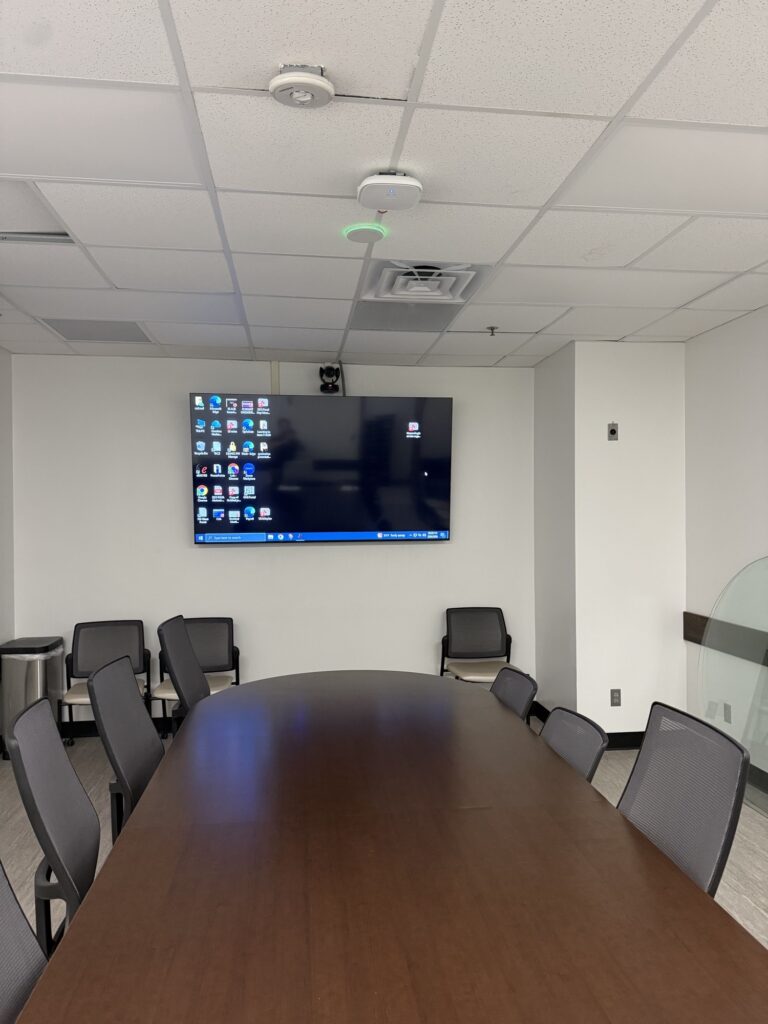
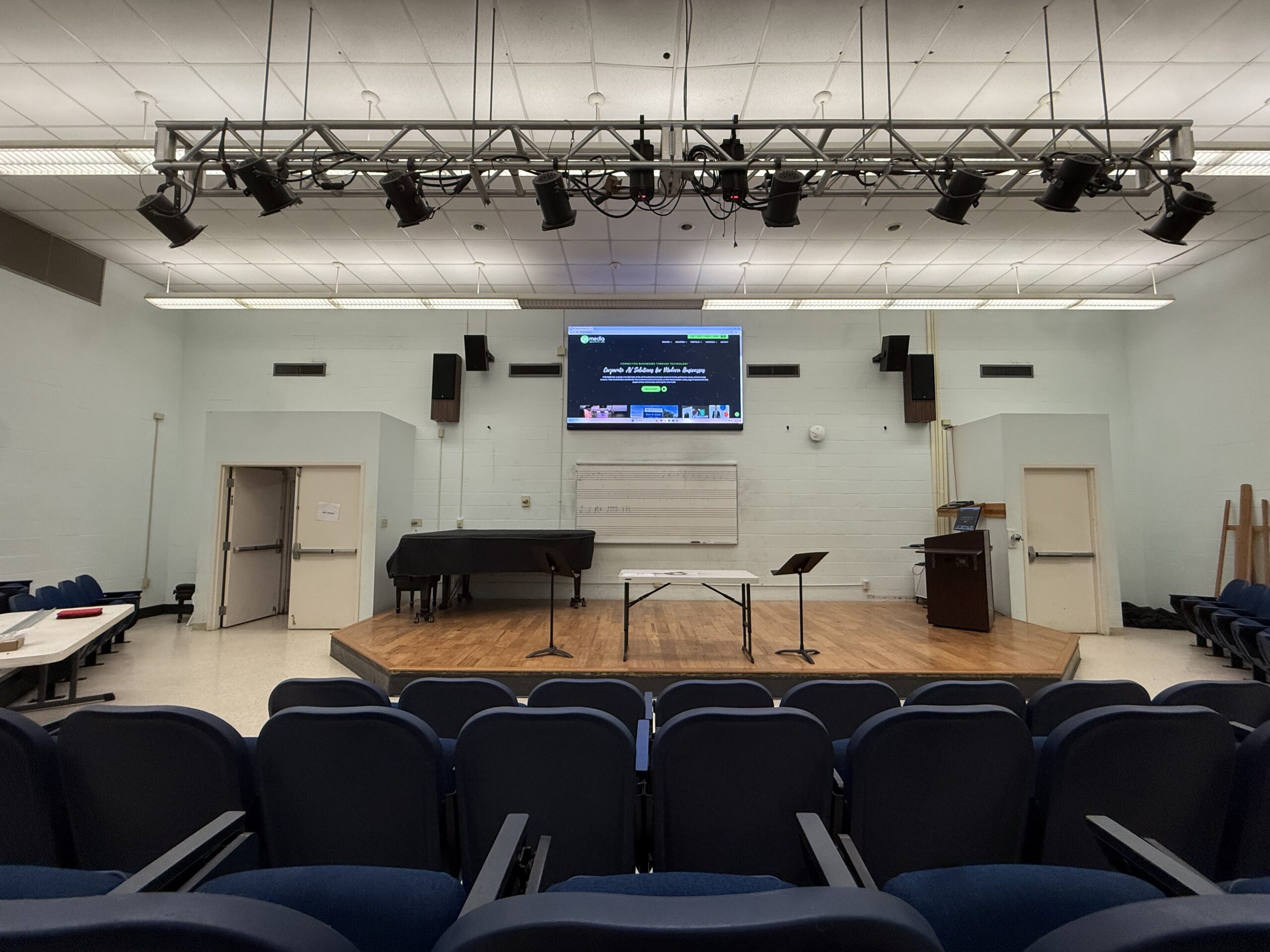
Understanding commercial audiovisual pricing, budgeting, and the value of professional system design.
If you’re planning a new conference room, upgrading an auditorium, building a command center, or outfitting an entire facility with audiovisual technology, one of your first questions is probably a simple one:
How much is this going to cost?
The answer? It depends.
We know. That’s probably not the answer you were hoping for.
At Go Media, we design and install professional audiovisual systems for businesses, schools, universities, government agencies, and organizations throughout Louisiana and Texas. And if there’s one thing our experience has taught us, it’s that two spaces that look nearly identical can have dramatically different AV requirements—and dramatically different price tags.
A small meeting room might need nothing more than a display and an all-in-one video conferencing soundbar. Another room of the same size might require multiple microphones, advanced audio processing, integrated control, automated cameras, and connectivity to systems throughout the building.
Both are conference rooms. Both have audiovisual systems. But they’re not the same project.
That’s why we don’t approach AV design with a catalog of predetermined room packages. Every system starts with understanding what the customer needs to accomplish.
So, rather than offer a single number that probably won’t apply to your situation, we’re going to explain what drives commercial AV pricing in 2027, provide general budgeting ranges for common applications, and explore why thoughtful system design is so important.
The short answer: Based on Go Media’s experience designing and installing commercial AV systems, 2027 planning ranges run from about $3,000–$8,000 for a huddle room to $75,000–$1,000,000+ for command centers and $50,000–$1,000,000+ for stadiums and large outdoor systems. What a room needs to do, more than its size, determines where it falls.
In This Article
- 2027 Commercial AV Budgeting Reference (Quick Table)
- Commercial AV Pricing in 2027: Where Does the Market Stand?
- 2027 Budgeting Ranges by Room and System Type
- Huddle Rooms & Small Collaboration Spaces
- Small & Medium Conference Rooms
- Large Conference Rooms & Executive Boardrooms
- Training Rooms & Classrooms
- Divisible Meeting Rooms & Multipurpose Spaces
- School Cafetoriums, Gymatoriums & Multipurpose Halls
- Gymnasiums & Athletic Facilities
- Council Chambers, School Board Rooms & Government Meeting Facilities
- Auditoriums, Performing Arts Centers & Large Assembly Spaces
- Houses of Worship
- Command Centers, EOCs & Real-Time Crime Centers
- Digital Signage Systems
- Direct-View LED Video Walls (DVLED)
- Stadiums, Arenas & Large Outdoor AV Systems
- Why Can Two Similar Rooms Have Such Different AV Prices?
- The Budget Dictates the Design
- No Two Projects Are Alike. Neither Are Our Designs.
- What Should You Include When Requesting an AV Quote?
- Frequently Asked Questions
- The Bottom Line
2027 Commercial AV Budgeting Reference
The table below summarizes Go Media’s 2027 planning ranges for common commercial AV applications. Each category is explained in more detail further down the page.
| Space / System Type | Typical Planning Range (2027) |
|---|---|
| Huddle Rooms & Small Collaboration Spaces | $3,000–$8,000 |
| Small & Medium Conference Rooms | $10,000–$35,000 |
| Large Conference Rooms & Executive Boardrooms | $35,000–$100,000 |
| Training Rooms & Classrooms | $12,000–$50,000 per room |
| Divisible Meeting Rooms & Multipurpose Spaces | $30,000–$125,000+ |
| School Cafetoriums, Gymatoriums & Multipurpose Halls | $25,000–$200,000+ |
| Gymnasiums & Athletic Facilities | $20,000–$150,000+ |
| Council Chambers, School Board Rooms & Government Meeting Facilities | $50,000–$250,000 |
| Auditoriums, Performing Arts Centers & Large Assembly Spaces | $75,000–$750,000+ |
| Houses of Worship | $20,000–$300,000+ |
| Command Centers, Emergency Operations Centers & RTCCs | $75,000–$1,000,000+ |
| Digital Signage Systems | $1,500–$5,000 per display |
| Direct-View LED Video Walls (DVLED) | $35,000–$500,000+ per installation |
| Stadiums, Arenas & Large Outdoor AV Systems | $50,000–$1,000,000+ |
These figures are general planning ranges, not minimums, maximums, or standards for evaluating individual proposals. Actual projects may fall substantially above or below these figures depending on their scope.
Commercial AV Pricing in 2027: Where Does the Market Stand?
The commercial audiovisual industry has experienced significant changes over the past several years.
The early 2020s brought unusual volatility in equipment availability, manufacturing costs, transportation expenses, and global supply chains. Those conditions made pricing and project planning considerably less predictable than they had been historically.
Fortunately, many of those extraordinary disruptions have eased. Equipment availability has generally improved, supply chains have become more predictable, and the rapid pricing fluctuations that characterized portions of the previous five years have moderated.
That doesn’t mean audiovisual equipment has returned to its pricing from five years ago.
In many product categories, costs remain higher. However, the technology itself has also advanced considerably.
Today’s commercial AV systems can offer capabilities that were substantially more expensive, more complicated, or simply unavailable just a few years ago:
- Intelligent cameras that automatically frame and track meeting participants.
- Advanced microphone systems that identify and isolate speakers while reducing unwanted noise.
- More capable video conferencing systems with native Microsoft Teams and Zoom integration.
- Network-based audio and video distribution that allows content to be routed throughout an entire facility.
- Higher-resolution, more flexible direct-view LED displays.
- Sophisticated automation and control systems that make increasingly capable rooms easier to operate.
- Improved remote management, monitoring, and diagnostic capabilities.
In other words, while the cost of many systems has increased over the past five years, so has the amount of functionality and performance customers receive for their investment.
And that distinction matters when comparing today’s AV systems to installations from several years ago.
What Does a Commercial AV System Cost? 2027 Budgeting Ranges by Room and System Type
The following ranges provide general budgeting guidance based on Go Media’s experience designing and installing commercial audiovisual systems. They are intended to help organizations understand the approximate magnitude of an investment—not establish a universal price for any particular room.
These ranges generally contemplate professionally supplied and installed AV equipment, including typical integration and configuration. They do not necessarily include construction, electrical work, major infrastructure modifications, architectural improvements, or other project-specific requirements.
An Important Note About These Price Ranges
These figures are not minimums, maximums, or benchmarks for determining whether a proposal is reasonably priced. A professionally designed AV system may fall well below or substantially above the ranges presented here and still be entirely appropriate for its intended application.
Every project is different. Equipment selection, functionality, room conditions, installation requirements, and numerous other factors influence the final investment.
A system costing twice the upper end of a listed range isn’t necessarily overpriced, just as a system costing half the lower end isn’t necessarily inadequate.
The scope determines what the system needs to accomplish. The budget helps determine how we get there.
These ranges are starting points for planning conversations—not standards against which individual proposals should be judged.
1. Huddle Rooms and Small Collaboration Spaces
Go Media’s 2027 planning range for huddle rooms: $3,000–$8,000
Small meeting spaces designed for two to six people are often among the simplest commercial AV installations.
A basic huddle room may include:
- A commercial flat-panel display.
- An all-in-one video conferencing soundbar with integrated camera, microphones, and speakers.
- USB connectivity for bring-your-own-device (BYOD) conferencing.
- Basic mounting, cabling, and installation.
More advanced configurations may incorporate a dedicated Microsoft Teams Rooms or Zoom Rooms system, wireless presentation capabilities, touch-panel controls, or additional connectivity.
The biggest cost distinction is often whether the room simply provides equipment for a user to connect their laptop or functions as a dedicated, standalone conferencing environment.
2. Small and Medium Conference Rooms
Go Media’s 2027 planning range for small and medium conference rooms: $10,000–$35,000
Conference rooms serving approximately six to twelve participants can vary significantly in complexity.
A typical system might include:
- One or two commercial displays.
- A dedicated video conferencing system.
- A conferencing camera with intelligent framing.
- Integrated microphones and speakers.
- Wired or wireless presentation capabilities.
- A tabletop or wall-mounted control interface.
More sophisticated systems may use ceiling microphones, distributed loudspeakers, digital signal processing (DSP), or additional cameras.
A straightforward conference room can be relatively economical. A similarly sized room with demanding conferencing requirements may require a substantially larger investment.
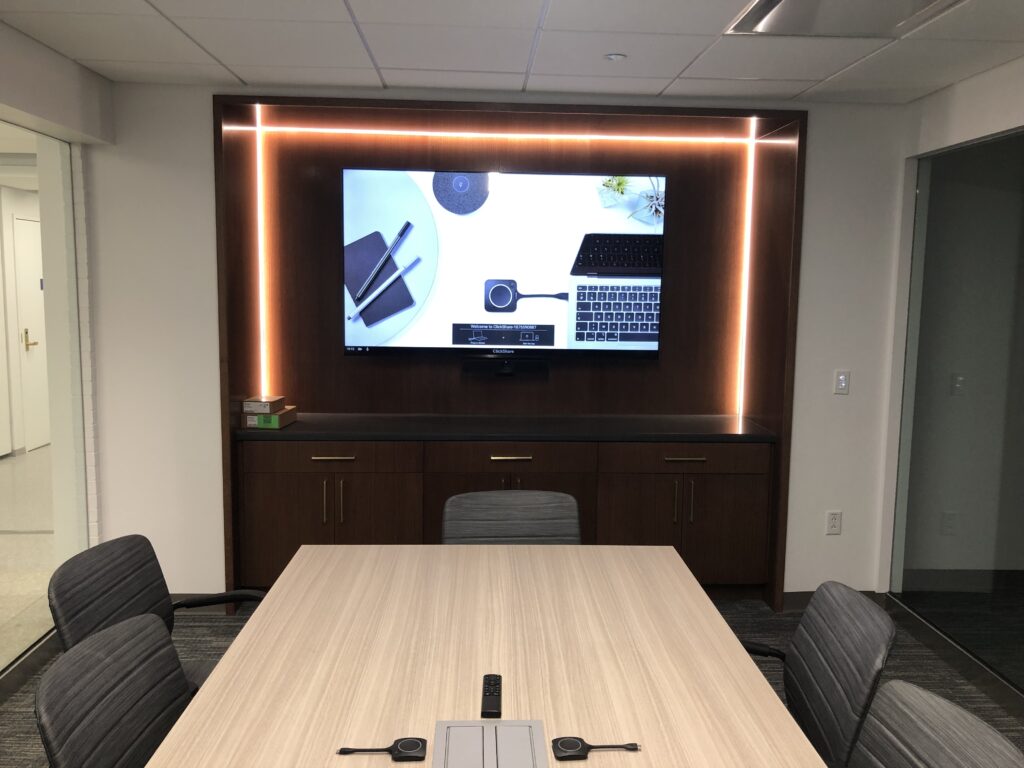
3. Large Conference Rooms and Executive Boardrooms
Go Media’s 2027 planning range for large conference rooms and executive boardrooms: $35,000–$100,000
Larger conference rooms and executive boardrooms often require a more deliberate approach to audio coverage, camera positioning, content distribution, and user control.
Possible components include:
- Multiple large-format commercial displays.
- Multiple cameras or automated camera tracking.
- Ceiling or tabletop microphone arrays.
- Distributed audio systems.
- Dedicated audio processing and acoustic echo cancellation.
- Centralized control processors and touch panels.
- Integration with Microsoft Teams Rooms, Zoom Rooms, or other collaboration platforms.
- Connectivity to adjoining rooms or facility-wide systems.
Executive boardrooms may also incorporate hidden or retractable displays, custom furniture integration, premium finishes, and other architectural considerations.
The number of seats alone is rarely enough to determine the cost.
4. Training Rooms and Classrooms
Go Media’s 2027 planning range for training rooms and classrooms: $12,000–$50,000 per room
Training facilities and classrooms can range from basic instructional spaces to highly integrated environments supporting hybrid learning, lecture capture, and remote participation.
Common options include:
- Large-format displays or projection systems.
- Interactive flat panels.
- Instructor microphones and distributed speakers.
- Document cameras.
- Multiple presentation sources.
- Classroom control systems.
- Lecture recording and streaming.
- Remote-learning cameras and conferencing systems.
A basic classroom presentation system may be relatively simple, while a hybrid teaching space supporting multiple camera angles, automated recording, and remote students can be considerably more involved.
For schools and universities, standardizing certain operational features across multiple classrooms can also create opportunities for consistency and more efficient deployments, while still accommodating the individual requirements of each space.
5. Divisible Meeting Rooms and Multipurpose Spaces
Go Media’s 2027 planning range for divisible and multipurpose rooms: $30,000–$125,000+
A divisible room might function as one large space during an event and two or three independent rooms when partitions are closed.
That sounds straightforward until you consider what the AV system needs to accomplish.
When the partitions are open, microphones, speakers, displays, and presentation sources may need to operate together.
When they’re closed, each room may need to function independently, with separate audio, video, and control.
Possible components include:
- Multiple displays or projection systems.
- Distributed microphones and speakers.
- Audio and video processing.
- Partition sensors.
- Automated room-combining logic.
- Independent touch-panel controls.
- Flexible source routing.
- Conferencing or recording capabilities.
Much of the investment in these systems is associated with making the different configurations work reliably and intuitively.
6. School Cafetoriums, Gymatoriums, and Multipurpose Halls
Go Media’s 2027 planning range for school multipurpose halls: $25,000–$200,000+
School multipurpose facilities are particularly interesting because a single space may serve several completely different purposes.
On Monday, it’s a cafeteria. Tuesday, it’s a student assembly. Friday evening, it’s a theatrical performance or awards ceremony.
These systems may include:
- Distributed or directional loudspeaker systems.
- Wireless microphones.
- Digital audio mixers and processing.
- Large-format projection or LED displays.
- Stage lighting and control.
- Presentation and playback systems.
- Multiple operating modes for different events.
- Recording or livestreaming equipment.
Room acoustics, ceiling height, audience size, and the number of different activities the space must support can have a major impact on the design.
7. Gymnasiums and Athletic Facilities
Go Media’s 2027 planning range for gymnasiums and athletic facilities: $20,000–$150,000+
Gymnasium AV systems present challenges that don’t exist in a typical meeting room.
Large spaces, reflective surfaces, crowd noise, and long distances between equipment and users all influence system design.
Depending on the application, a gymnasium might incorporate:
- High-output loudspeaker systems.
- Digital signal processing and amplification.
- Wireless microphones.
- Music and announcement sources.
- Scoreboard or video display integration.
- Video replay or production equipment.
- Distributed control locations.
- Connections to adjacent athletic facilities.
A system designed primarily for clear public-address announcements may cost considerably less than one intended to deliver high-impact music, video production, and live event experiences.
8. City Council Chambers, School Board Rooms, and Government Meeting Facilities
Go Media’s 2027 planning range for council chambers and government meeting rooms: $50,000–$250,000
Government meeting spaces frequently require capabilities beyond those of a traditional conference room.
A council chamber or school board meeting room may need to support public meetings, formal voting, agenda management, public participation, and permanent records.
Possible components include:
- Individual microphones for elected officials or board members.
- Request-to-speak and microphone management.
- Electronic voting and result displays.
- Agenda and meeting management integration.
- Audience and dais displays.
- Multiple cameras and automated camera switching.
- Recording, streaming, and archival systems.
- Public-comment microphones.
- Assisted-listening systems.
- Integrated room control.
At Go Media, we have extensive experience with these environments, including specialized meeting management technologies such as Televic.
A relatively simple meeting room and a fully integrated legislative chamber are fundamentally different projects, even if both have the same number of seats.
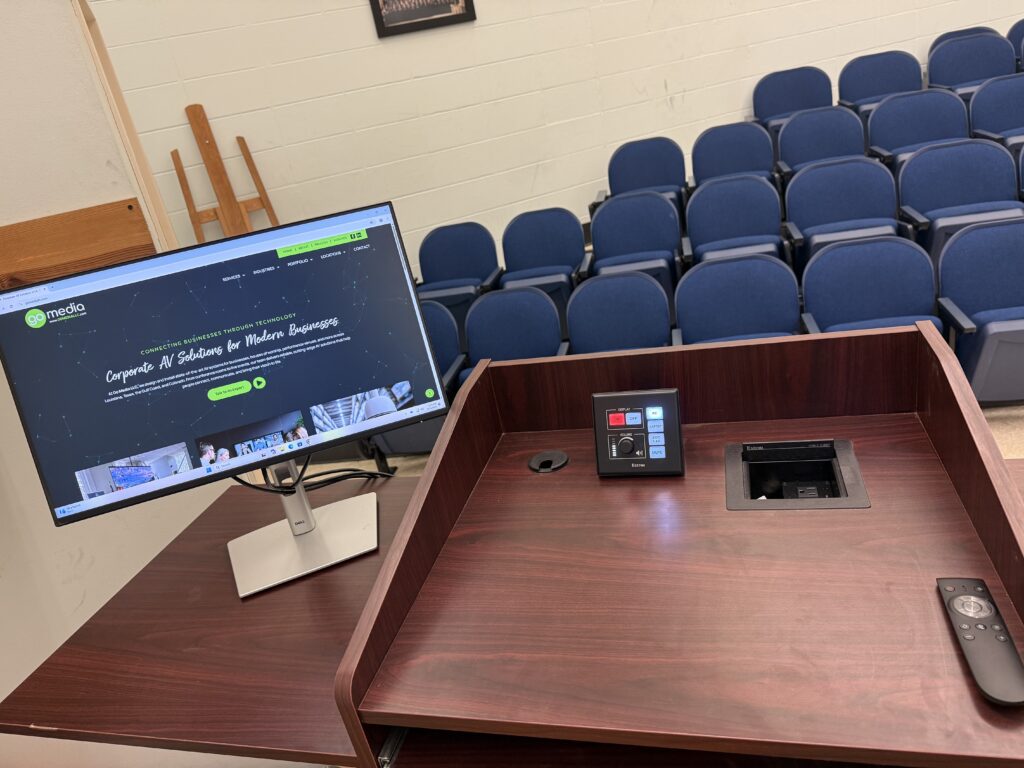
9. Auditoriums, Performing Arts Centers, and Large Assembly Spaces
Go Media’s 2027 planning range for auditoriums and performing arts centers: $75,000–$750,000+
Auditoriums and performing arts facilities can be among the most technically demanding audiovisual environments.
The system requirements depend heavily on the intended uses.
A lecture auditorium might prioritize speech intelligibility, presentation displays, and recording. A performing arts center may require theatrical audio, sophisticated lighting, stage communications, and production infrastructure.
Possible systems include:
- Large-scale sound reinforcement.
- Digital mixing consoles.
- Stage monitoring.
- Wireless microphone systems.
- Projection or direct-view LED displays.
- Theatrical lighting and lighting control.
- Video switching and production.
- Recording and livestreaming.
- Stage intercom and communications.
- Integrated control and automation.
A fully equipped performing arts venue may involve several specialized systems working together rather than one traditional AV installation.
10. Houses of Worship
Go Media’s 2027 planning range for houses of worship: $20,000–$300,000+
Houses of worship often combine requirements from several different AV disciplines.
A facility may need high-quality speech reinforcement, live music production, video presentation, livestreaming, and volunteer-friendly control.
Potential components include:
- Main loudspeaker systems and stage monitors.
- Digital mixing consoles.
- Wired and wireless microphones.
- Projection or LED video walls.
- Camera systems.
- Video switching and livestreaming.
- Recording equipment.
- Stage lighting.
- Distributed audio for overflow spaces.
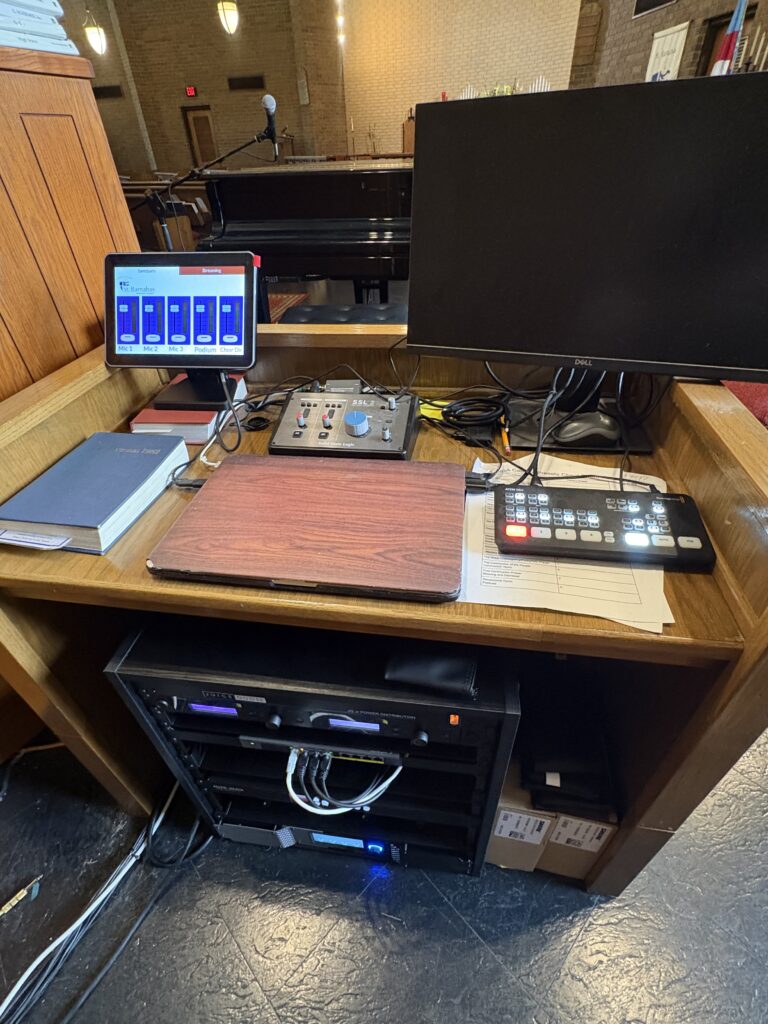
A small sanctuary focused on speech reinforcement has very different needs from a large contemporary worship facility with a full band, multiple cameras, and broadcast-style production. For a closer look, see our guide to church AV systems.
11. Command Centers, Emergency Operations Centers, and Real-Time Crime Centers
Go Media’s 2027 planning range for command centers, EOCs, and RTCCs: $75,000–$1,000,000+
Command centers and real-time crime centers are specialized environments where audiovisual systems can play an important operational role.
These facilities may need to display and distribute information from numerous sources simultaneously, often across multiple workstations, video walls, and operator positions.
Possible components include:
- Large-format video walls or direct-view LED displays.
- Video wall processors.
- AV-over-IP distribution systems.
- Operator workstation integration.
- Source switching and routing.
- Control systems and touch panels.
- Conferencing and collaboration equipment.
- Redundant equipment or signal paths.
- Monitoring and support capabilities.
The number of sources, destinations, operators, and required operating modes can dramatically affect the design.
For example, displaying one computer on a large screen is a fundamentally different challenge from managing dozens of independent information sources across multiple operator workstations and display surfaces.
See this work in practice: Go Media’s law enforcement AV projects include the Ouachita Parish Sheriff’s Department Real-Time Crime Center and the Thibodaux Volunteer Fire Department Operations Center.
12. Digital Signage Systems
Go Media’s 2027 planning range for digital signage: $1,500–$5,000 per display location
Commercial digital signage can be as simple as a single informational display or as sophisticated as an enterprise-wide content distribution platform.
A typical installation might include:
- A commercial-grade display.
- A signage media player.
- Mounting and cabling.
- Network connectivity.
- Content management software.
- Scheduling and remote management.
More advanced deployments may involve interactive kiosks, synchronized displays, wayfinding systems, or centralized content management across numerous facilities.
The hardware is only one part of the investment. Content management, licensing, infrastructure, and long-term administration should also be considered.
13. Direct-View LED Video Walls (DVLED)
Go Media’s 2027 planning range for DVLED video walls: $35,000–$500,000+ per installation
Direct-view LED technology has expanded well beyond the traditional rectangular video wall.
Today’s DVLED systems can be used for large-format presentation displays, architectural features, curved installations, column wraps, retail environments, lobbies, and immersive experiences.
Pricing depends on several factors, including:
- Overall display dimensions.
- Pixel pitch and viewing distance.
- Indoor or outdoor application.
- Brightness and performance requirements.
- LED cabinet design and configuration.
- Video processing requirements.
- Mounting structure and installation access.
- Content resolution and source management.
- Serviceability and maintenance requirements.
Two LED walls of identical physical dimensions can have very different prices depending on their resolution, construction, processing, and intended application.
Specialty shapes and architectural installations introduce additional considerations. If you’re still weighing your options, see Direct View LED vs. TV Video Walls.
14. Stadiums, Arenas, and Large Outdoor AV Systems
Go Media’s 2027 planning range for stadiums, arenas, and large outdoor systems: $50,000–$1,000,000+
Large athletic venues and outdoor facilities introduce another level of complexity.
Potential systems include:
- High-output sound reinforcement.
- Weather-resistant loudspeakers.
- Large-format outdoor LED displays.
- Video production and replay.
- Distributed audio and announcement systems.
- Control and equipment infrastructure.
- Specialized mounting and structural systems.
- Long-distance signal distribution.
Environmental exposure, coverage requirements, venue size, structural considerations, and event production capabilities can significantly influence the final cost.
For major venues, audiovisual infrastructure can represent a substantial capital investment. See how we approached it at UL Lafayette’s new football stadium.
Why Can Two Similar Rooms Have Such Different AV Prices?
Here’s an example we encounter regularly.
Imagine two conference rooms. Both seat twelve people. Both have a large display on the wall. Both support Microsoft Teams meetings.
To someone walking into either room, they might look almost identical.
In the first room, a video conferencing soundbar provides the camera, microphone, and speaker functionality. A small conferencing appliance handles the meeting, and a simple control interface allows users to start calls.
In the second room, ceiling microphones capture audio from every seat. A dedicated digital signal processor manages microphone mixing, noise reduction, and acoustic echo cancellation. Multiple cameras automatically select views based on who’s speaking. Distributed loudspeakers provide consistent coverage, while a control processor manages displays, sources, cameras, and room functions.
Both rooms accomplish the same basic objective: people can participate in a video conference.
But they deliver different levels of performance, flexibility, and functionality.
And naturally, they carry different price tags.
The important question isn’t which system costs more. It’s which system appropriately meets the customer’s needs.
The Simpler It Looks, the More Complicated It Might Be
One of the great ironies of professional AV design is that a sophisticated system can actually be easier to operate than a simple one.
Imagine walking into a conference room and pressing a single button labeled “Start Meeting.”
The displays turn on. The correct inputs are selected. The cameras activate. The microphones and speakers are ready. The conferencing system launches.
From the user’s perspective, one button did everything.
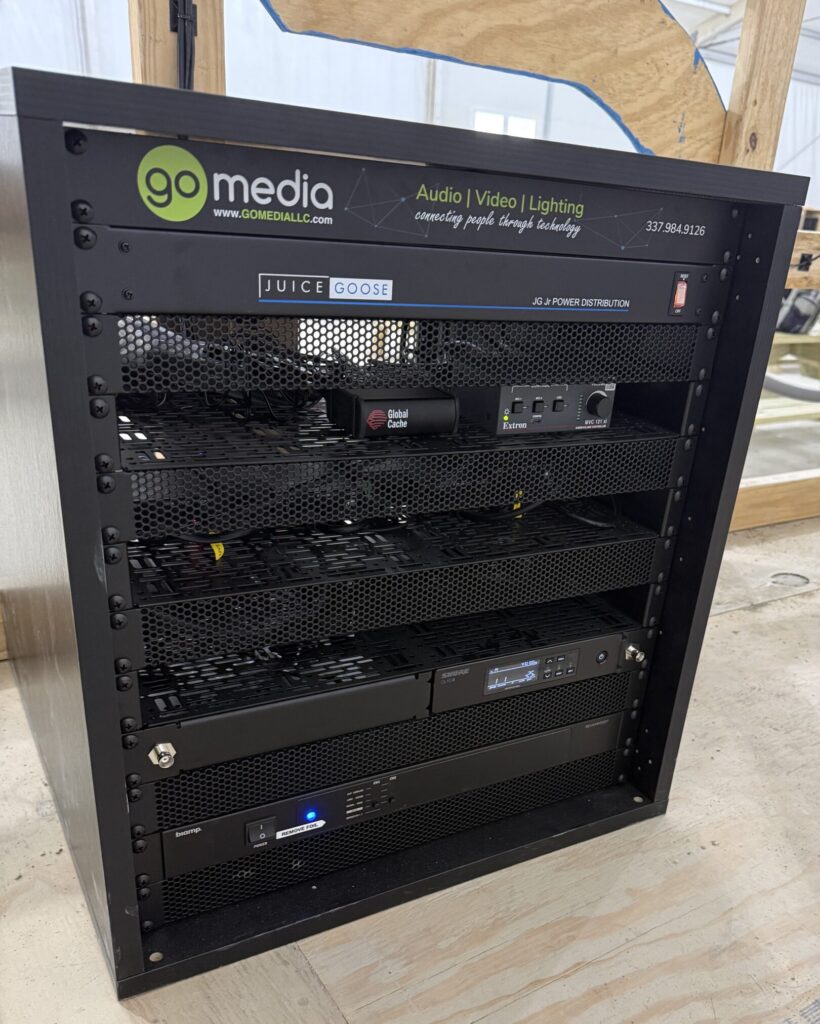
Behind the scenes, however, there may be an extraordinary amount of communication taking place between control processors, audio processors, video equipment, displays, network switches, and conferencing devices.
There are a whole lot of ones and zeros flying around inside that equipment rack to make one simple button do its job.
And that’s exactly the point.
The complexity should live behind the scenes, not in the hands of the person trying to run a meeting.
Designing, programming, installing, testing, and supporting that level of integration requires considerably more than simply connecting a few pieces of equipment together.
The finished product may look simple. Making it simple is often where much of the expertise comes in.
The Budget Dictates the Design
There’s a phrase we use at Go Media that captures one of the most important principles of audiovisual integration:
The budget dictates the design.
But that doesn’t mean the first step should be picking an arbitrary number and seeing how much equipment fits inside it.
Quite the opposite.
First, identify the scope. Then determine what it will take to accomplish that scope. Finally, develop a design that aligns the requirements with the available budget.
A successful AV project starts with understanding what the customer actually needs. (Here’s how our design and installation process works.)
What will the room be used for? How many people will occupy it? What functions are essential? Which features would be nice to have? Will it need to integrate with existing equipment? Are there plans for future expansion?
Those questions matter far more than the size of the television on the wall.
Once the scope is understood, an experienced integrator can evaluate the different approaches available.
There might be several ways to achieve the same objective.
One approach may offer greater flexibility, expandability, or automation. Another may accomplish the core requirements with fewer components and a simpler design.
Neither is inherently wrong.
A $75,000 system isn’t automatically better than a $40,000 system if both accomplish everything the customer needs.
Likewise, a $40,000 system isn’t necessarily a bargain if it fails to deliver the functionality the organization actually requires.
The goal is not to sell the most expensive system. The goal is to design the right system.
What Happens When the Scope Exceeds the Budget?
This is where good system design becomes especially valuable.
If a customer’s desired functionality exceeds the available budget, there are often opportunities to make adjustments.
Perhaps a different display technology would be more economical. Maybe some advanced features can be deferred to a later phase. Certain functions might be accomplished with a simpler control system, or existing infrastructure may be reusable.
Sometimes the best approach is to design the system for future expansion while installing only the essential components initially.
And sometimes, the requirements simply cannot be met responsibly within the available budget.
An experienced integrator should be willing to explain that, too.
Cutting costs is easy. Cutting costs without compromising the functionality, reliability, or long-term value of the system is where thoughtful design matters.
No Two Projects Are Alike. Neither Are Our Designs.
At Go Media, we don’t believe in one-size-fits-all audiovisual systems.
There isn’t a standard conference room package, council chamber template, or auditorium design that we simply pull off the shelf and install everywhere we go. (Browse our project portfolio and you’ll see why.)
Why? Because no two customers have exactly the same needs.
Even two nearly identical rooms can require very different solutions depending on how they’re used, who’s using them, what technology already exists, and what the organization expects the system to accomplish.
That’s where working with an experienced AV integrator makes all the difference.
Our job isn’t simply to sell equipment. It’s to navigate the countless decisions that go into creating a successful audiovisual system so our customers don’t have to become AV experts themselves.
We evaluate the space, listen to the customer’s objectives, identify the necessary functionality, consider the available budget, and develop a system around those requirements.
Sometimes that means recommending a straightforward solution with relatively few components. Other times, it means engineering a sophisticated system involving dozens of interconnected devices, extensive programming, and advanced automation.
Neither approach is inherently better.
The right design is the one that accomplishes what the customer needs, without unnecessary complexity or expense.
And because Go Media works with a broad range of leading audiovisual manufacturers, we’re not limited to forcing every project into one manufacturer’s ecosystem or a predetermined equipment package.
We can evaluate different technologies, compare approaches, and select equipment based on the needs of the project—not the other way around.
We Handle the Complexity. You Enjoy the Simplicity.
A successful audiovisual installation involves far more than selecting equipment.
There’s system engineering, infrastructure planning, equipment compatibility, programming, installation, configuration, testing, commissioning, and training.
For a customer trying to build a school, renovate a conference room, or modernize a government facility, navigating those details can be overwhelming.
That’s what we’re here for.
Go Media takes responsibility for bringing those pieces together into a cohesive, reliable system.
We want our customers focused on what they need to accomplish—not wondering which video processor communicates with which control system or why a microphone isn’t behaving properly.
You tell us what you need the system to do. We’ll help you figure out the best way to make it happen.
That’s the value of professional AV integration, and it’s the philosophy behind every system we design.
What Should You Include When Requesting an AV Quote?
The more accurately a project is defined at the beginning, the more useful the resulting proposal will be.
You don’t need to know which microphone manufacturer to specify or what type of video processor the system requires.
That’s our job.
But it helps tremendously to understand the outcomes you want.
For example:
- What type of room or facility are you planning?
- What activities will take place there?
- How many people will use the space?
- Do you need video conferencing, recording, streaming, or presentation capabilities?
- Will the system connect to other rooms or facilities?
- Are there existing systems or infrastructure to consider?
- Is this a new construction project or an upgrade?
- Are there any special operational or performance requirements?
- Is there an established budget or target investment?
A clear scope allows an integrator to evaluate appropriate solutions rather than guessing at requirements.
And if the project is still in the early planning stages, that’s perfectly fine.
At Go Media, we can help develop preliminary budgeting guidance before a complete system design has been established. Those early estimates can help organizations plan capital expenditures, evaluate options, and determine how to proceed.
As the scope becomes more defined, the pricing can become more precise.
Frequently Asked Questions About Commercial AV Costs
How much does a commercial AV system cost in 2027?
Based on Go Media’s experience designing and installing commercial AV systems, 2027 planning ranges run from about $3,000–$8,000 for a huddle room to $75,000–$1,000,000+ for command centers and $50,000–$1,000,000+ for stadiums and large outdoor systems. Required functionality, not room size, drives the final cost.
How much does conference room AV cost?
Go Media’s 2027 planning range is $10,000–$35,000 for small and medium conference rooms and $35,000–$100,000 for large conference rooms and executive boardrooms.
Do these AV price ranges include construction or electrical work?
Generally, no. The ranges contemplate professionally supplied and installed AV equipment with typical integration and configuration. They do not necessarily include construction, electrical work, major infrastructure modifications, or architectural improvements.
How much does a direct-view LED video wall cost?
Go Media’s 2027 planning range for DVLED video walls is $35,000–$500,000+ per installation, depending on size, pixel pitch, indoor or outdoor use, processing, mounting, and serviceability.
Can I get an AV budget estimate before the system is designed?
Yes. Go Media can provide preliminary budgeting guidance before a complete system design is established, and pricing becomes more precise as the scope is defined.
The Bottom Line: What Should You Budget for Commercial AV in 2027?
Commercial audiovisual systems can range from a few thousand dollars for a straightforward huddle room to hundreds of thousands—or even millions—of dollars for sophisticated, facility-wide installations.
That’s an enormous range, but it reflects the extraordinary variety of applications that fall under the term “commercial AV.”
The important thing to remember is that a room’s size or equipment list alone does not determine its cost. Its required functionality does.
A well-designed system should meet the organization’s needs, fit its operational environment, and provide long-term value.
At Go Media, we believe the best projects begin with a conversation about what you’re trying to accomplish—not a conversation about how much equipment we can sell you.
We don’t start with a box of equipment and look for a room to put it in. We start with your room, your objectives, and your budget—and design from there.
Because ultimately, the budget dictates the design.
And the right design is the one that works for you.
Planning a Commercial AV Project in 2027?
Whether you’re budgeting for a single conference room, renovating an existing facility, or planning a large-scale audiovisual installation, Go Media can help you understand your options.
Our team designs and integrates professional audiovisual systems for commercial, educational, government, and institutional environments, with extensive experience serving organizations throughout Louisiana and Texas.
From preliminary budgeting and system design through installation, programming, and commissioning, we’re here to help turn your requirements into a system that works.
Contact Go Media to discuss your project and begin developing a solution tailored to your needs.