

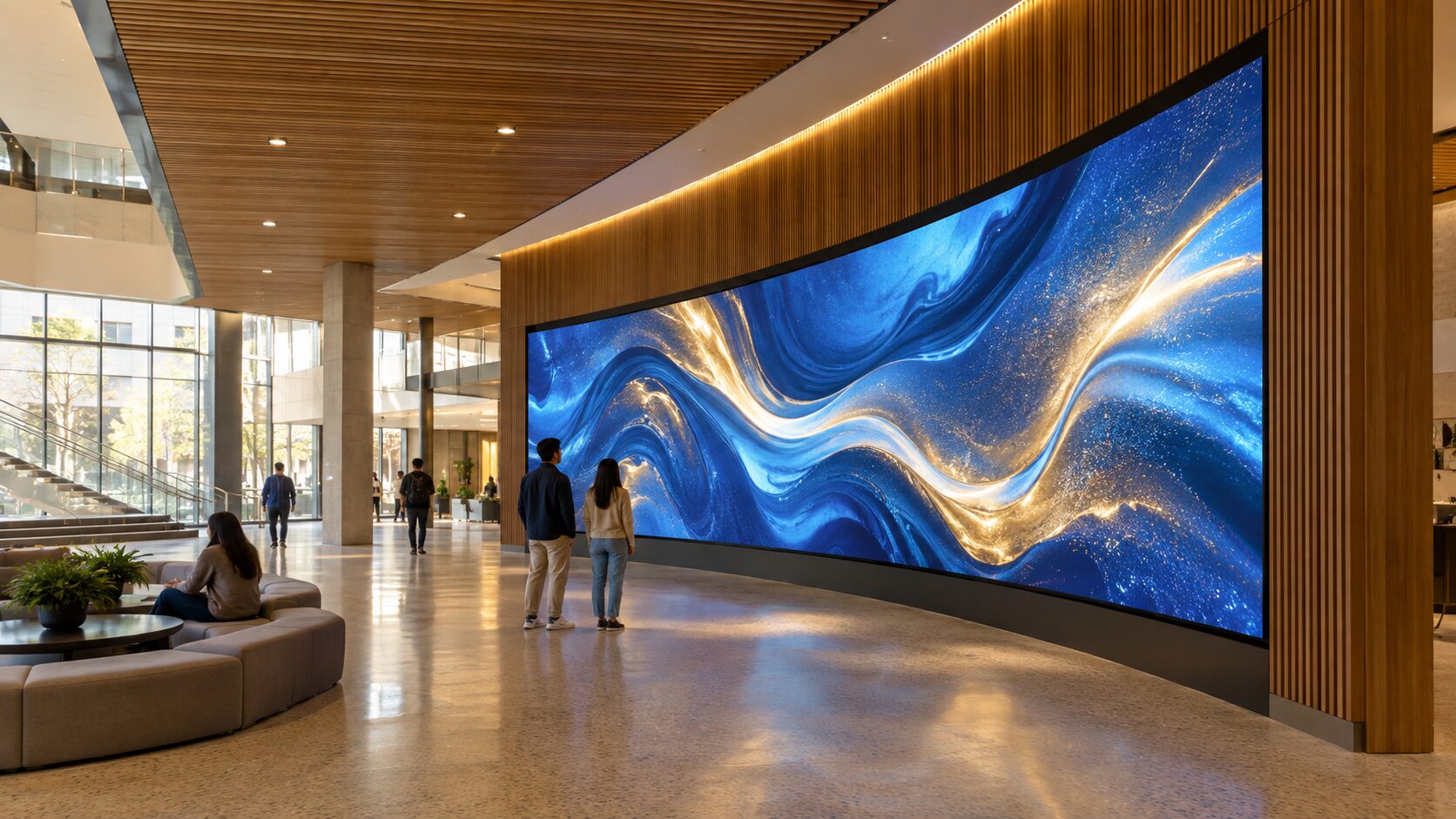
When most people picture a video display, they picture a rectangle. That makes sense: televisions, projection screens and computer monitors have trained us to think in tidy 16:9 boxes. Most direct-view LED displays are rectangular too—but they do not have to be.
Direct-view LED, commonly shortened to DVLED, is assembled from modular LED panels or tiles rather than manufactured as one fixed sheet of glass. That modular construction is the reason it can scale to very large sizes with no visible bezel. It is also what gives designers room to bend, wrap, stack, suspend, angle and shape the display around an environment.
A conventional rectangle is often the right answer, especially when the goal is to show presentations, dashboards or standard video. But when the display is meant to become a destination, strengthen a brand or transform a public space, the rectangle may only be the starting point—and a custom LED video wall designed around the space can do far more.
Why direct view LED changes the design conversation
Traditional displays ask a familiar question: What size screen fits on this wall? Creative DVLED allows a more interesting question: What could this part of the building become?
The display can follow the architecture instead of forcing the architecture to accommodate a standard product. It can continue around a corner, trace a curved lobby wall, wrap a structural column or fill an unusual opening. Some systems can create transparent layers, walkable floors or sculptural forms. Specialized flexible products can even roll away when the display is not needed.
That freedom does not make the engineering disappear. It makes early collaboration more important. This is where Go Media does some of its best work: taking an ambitious visual idea, working through the structural, power, service and content realities, and turning it into a system that performs as impressively as it looks. The strongest creative LED projects bring the owner, architect, AV integrator, structural team and content designer together before the display is reduced to a generic rectangle on a drawing.
Curved and wraparound LED video walls
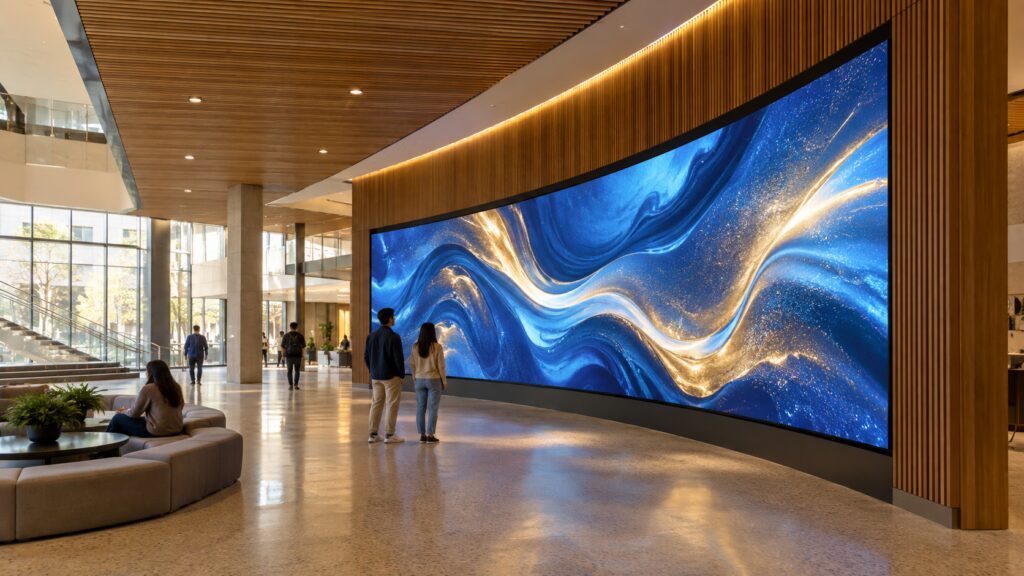
Curved LED is one of the most natural ways to move beyond the flat wall. A gentle concave curve can pull viewers into a command center, briefing room, museum exhibit or corporate lobby. A convex curve can wrap a column or create a display that remains visible as people move through a space. A full circular installation can turn an ordinary structural element into a digital landmark.
There are several ways to create the curve. Some LED cabinets connect at small angles to form a faceted arc. Other products use genuinely flexible modules and custom support structures to produce a smoother radius. The right approach depends on the viewing distance, pixel pitch, radius, content and budget.
The content matters just as much as the hardware. A standard 16:9 video stretched around a column will rarely create the intended effect. Successful curved displays use graphics composed for the exact canvas, with important text and faces kept away from corners, seams and extreme viewing angles.
LED column wraps, corners and dimensional forms
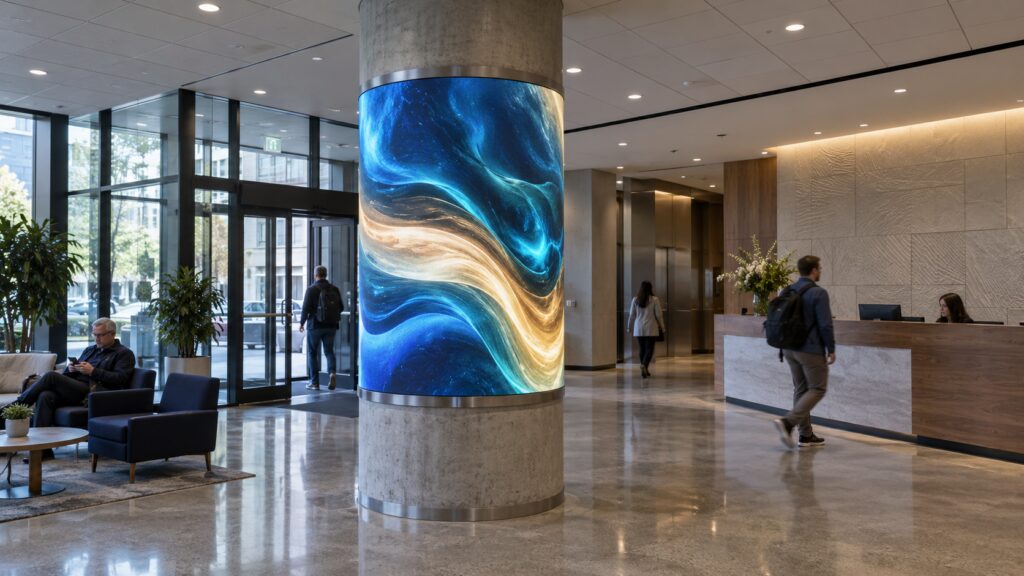
Right-angle LED corners can make an image appear to spill from one wall onto another. With content created for a particular viewing point, the same geometry can support the dramatic forced-perspective “3D billboard” effect seen in major entertainment and retail districts. It can be impressive, but the illusion is content-driven and works best from a planned viewing zone.
Columns can become digital signage, art, wayfinding or branded environmental features. LED can also form cubes, ribbons, arches, cylinders, suspended halos and irregular mosaics. Newer cabinet families offer multiple panel sizes and orientations, allowing designers to create negative space and asymmetrical forms rather than filling every available inch.
This is where DVLED starts behaving less like a television and more like a building material. The display is no longer simply mounted in the room; it becomes part of how the room is experienced. Go Media brings the AV and architectural pieces together so the finished display feels intentional—not like a very expensive screen added after the room was already designed.
Motorized and retractable (rollable) LED displays
A motorized projection screen can disappear into a ceiling, but a traditional LED wall is normally permanent. Specialized rollable LED systems are beginning to change that. Lightweight flexible LED strips or modules can travel onto a reel so the display lowers for an event and stores when the space needs to look clean or serve another purpose.
That opens interesting possibilities for multipurpose rooms, stages, lecture halls and architecturally sensitive spaces where a large permanent screen would dominate the room. It also comes with more engineering than a familiar projection screen: the LED surface, reel, drive system, signal path, cable management, safety controls and service access all have to work together.
Retractable LED remains a specialized category, not a drop-in replacement for every motorized screen. But when a bright, seamless image and a disappearing display are both important, it can solve a problem that once required a compromise.
Interactive LED floors: putting the image underfoot
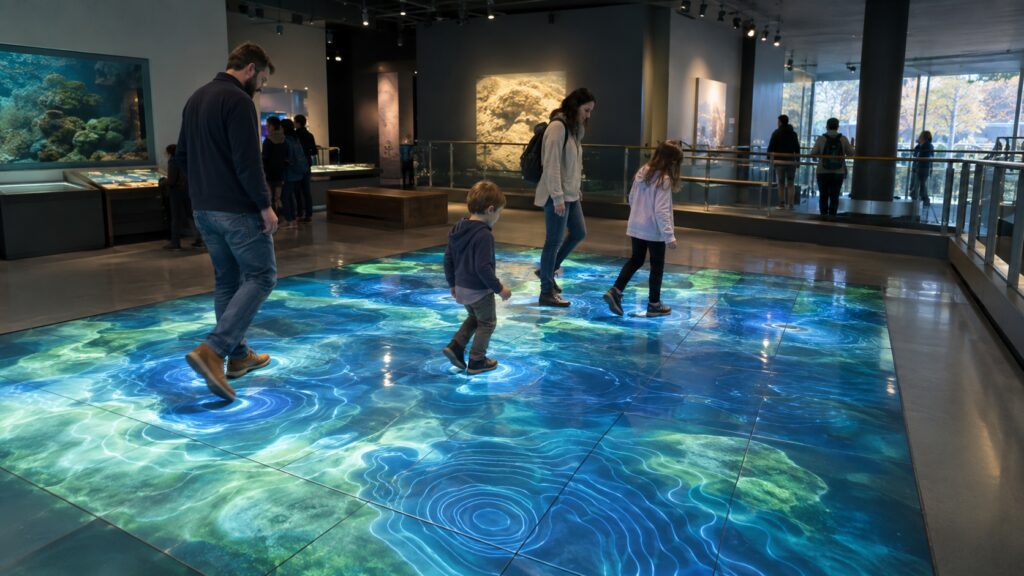
LED flooring uses purpose-built tiles designed to handle foot traffic and concentrated loads. It can extend a stage backdrop into the floor, create an immersive showroom, animate a museum or visitor center, or turn a normally overlooked surface into part of the story.
Interactive versions add sensors that respond to movement. Graphics can ripple beneath a visitor’s feet, reveal information as someone approaches, or react to performers in real time. For event spaces and experiential environments, that interaction can be more memorable than simply making a wall larger.
Floor LED must be selected and engineered as flooring. Load rating, slip resistance, impact protection, level transitions, accessibility, glare, cleaning and service access all matter. A standard wall cabinet should never be assumed suitable just because the image looks similar.
Transparent LED displays: content without closing the view
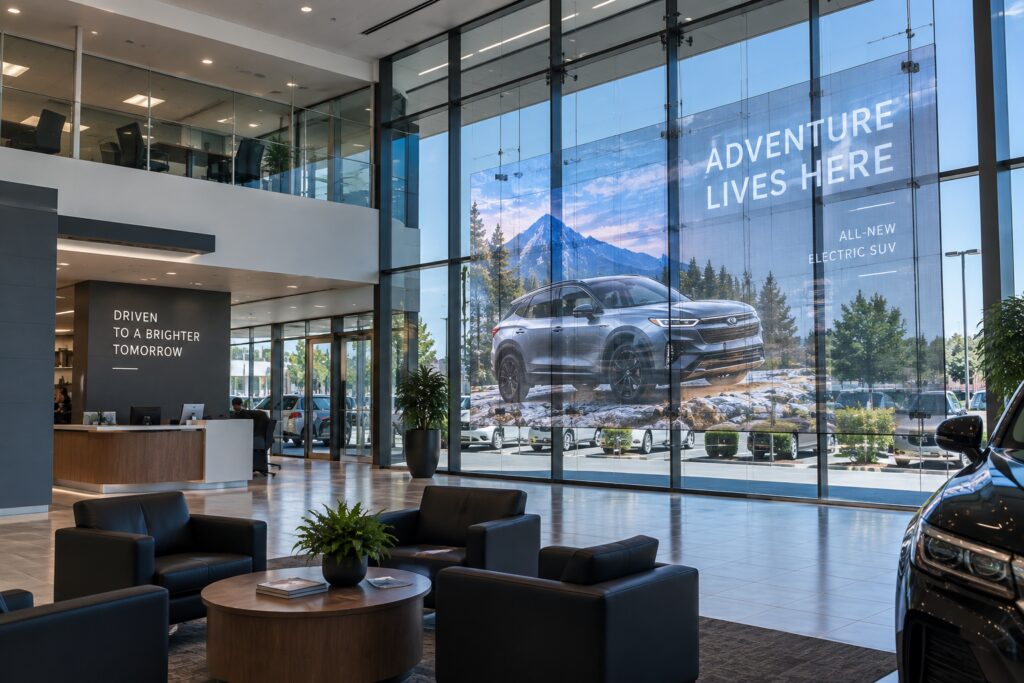
Transparent LED can place motion graphics and information on glass while preserving a view through the display. Depending on the product and application, it may use transparent film, mesh, strips or open-frame cabinets. Typical locations include storefront glass, atriums, building façades, museum exhibits and hospitality spaces.
Transparency is a tradeoff rather than magic. The open area that allows people to see through the display also affects resolution, contrast and the way black appears. Ambient light and whatever sits behind the glass become part of the visual composition. Fine text and conventional presentation slides may not be the right content; bold motion, color and simple forms usually work better.
Used thoughtfully, transparent LED can add a digital layer without turning a window into an opaque wall. It is especially effective when the architecture or merchandise behind the display should remain visible.
Double-sided, suspended and overhead LED displays
A display in the middle of a room does not have to show a blank back to half the audience. Ultra-thin double-sided LED can serve corridors, retail floors, airports, exhibit halls and large public areas where people approach from multiple directions. Suspended ribbons, rings and overhead elements can provide branding, wayfinding or ambient motion without consuming wall space.
These applications make rigging, weight, power distribution and maintenance access especially important. They also reward disciplined content design: when a display can be seen from nearly everywhere, every surface and transition becomes part of the experience.
Rectangles that refuse to sit still: LED kiosks and mobile DVLED
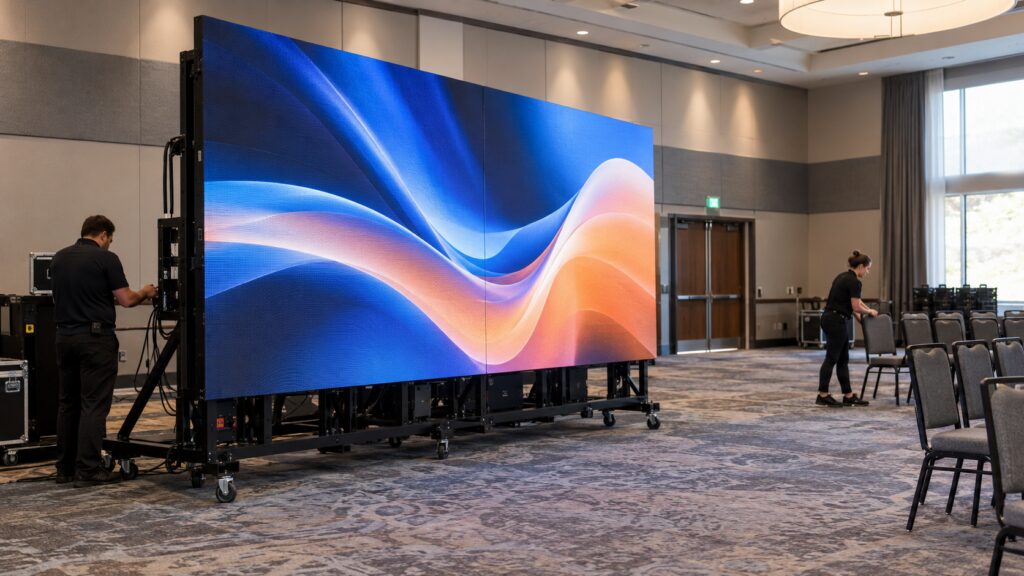
Not every creative LED idea needs a curve, a cylinder or a custom silhouette. Some of the most useful newer formats are still rectangles—they are simply vertical, self-contained or designed to move. Portrait-oriented DVLED kiosks can create tall, seamless digital signs for lobbies, campuses, retail environments and event spaces. A single unit can serve as a high-impact directory or promotional display, while several can be synchronized or arranged around an entrance to create a larger visual moment.
At a larger scale, all-in-one DVLED systems package the display, processing, power and controls into a more self-contained solution. Some can be installed on mobile stands and shared among training rooms, ballrooms, auditoriums or event spaces. Newer foldable models take that idea further: the display folds for transport and storage, rolls through an elevator or between rooms, then opens into a large seamless screen where it is needed. It is still a rectangle—but one that can go find its audience.
That mobility can make a major LED display useful across an entire campus instead of tying it to one wall. It does not eliminate planning, however. Travel routes, elevator and doorway clearances, floor loading, tipping resistance, power, cable protection, storage and protection of the LED face all need to be considered. “Portable” is relative when the screen is measured in feet rather than inches, but for schools, hotels, corporate campuses and event venues, a movable system can unlock uses that a permanent installation cannot. Go Media can help determine whether that flexibility will genuinely earn its keep—or whether the better answer is a permanent display designed around the room.
Before falling in love with a shape: 7 questions for a custom LED video wall
- What should the display accomplish? A presentation surface, architectural feature, advertising platform and immersive art installation have very different priorities.
- Where will people actually stand? Viewing distance and viewing angle influence pixel pitch, physical shape and the legibility of content.
- What will be shown? Unusual canvases need purpose-built content. Budgeting only for hardware can leave a spectacular display playing ordinary material that never uses it well.
- How bright is the environment? A sunlit storefront, indoor lobby and dark theater call for different brightness, contrast and surface characteristics.
- How will it be supported and serviced? Structure, weight, ventilation, power, data paths and front or rear service access need to be planned early.
- How close is the audience? Finer pixel pitch improves close-up image detail but changes cost, power density and product selection—including whether SMD or COB LED makes more sense.
- Is the application permanent, movable or retractable? Each choice changes the mounting, safety, cable management and maintenance strategy.
Design the LED display and the content together
Creative LED is most successful when the physical canvas and the media are treated as one system. A wraparound display needs content that travels naturally through the curve. A transparent installation must account for the real scene behind it. A floor requires graphics that make sense from above. A custom shape may need a specialized canvas size, mapping workflow and content-management plan.
It is also worth deciding what the display should look like when it is not the center of attention. Can it show subtle ambient motion? Can it complement the finishes in the room? Does it need to carry practical information between major presentations? The best installations remain useful after the opening-day “wow” moment.
Frequently asked questions about custom LED video walls
Can a direct view LED video wall be curved?
Yes. Curves are created either by joining LED cabinets at small angles to form a faceted arc or by mounting flexible LED modules on a custom support structure for a smoother radius. The achievable radius depends on the product, pixel pitch and viewing distance, so it should be confirmed early in design.
What is transparent LED best used for?
Transparent LED works well on storefront glass, atriums, building façades, museum exhibits and hospitality spaces where the view through the glass should stay open. Bold motion, color and simple shapes usually read better than fine text, because the open area that creates transparency also reduces resolution and contrast.
Can people walk on an LED floor?
Yes, when the floor uses purpose-built LED floor tiles rated for foot traffic and concentrated loads. Slip resistance, impact protection, transitions and service access all need to be engineered. A standard wall cabinet should never be used as flooring.
Does a custom-shaped LED display cost more than a standard rectangle?
Usually. Custom structure, specialized cabinets, additional engineering and purpose-built content all add cost. Planning early helps show where a creative format adds real value and where a standard rectangular LED video wall is the better investment.
Where does Go Media install custom LED video walls?
Go Media designs, installs and supports DVLED systems from our headquarters in Lafayette, serving thirteen metros across Louisiana, Texas and the Denver area.
When a standard rectangular LED video wall is still exactly right
Moving beyond rectangles should not mean adding complexity for its own sake. Standard rectangular DVLED remains an excellent choice for meeting rooms, auditoriums, command centers and other spaces built around familiar video formats. It is efficient, predictable and easy to feed with ordinary content. Go Media’s value is not in making every project exotic; it is in knowing when a creative format adds something meaningful and when a familiar rectangle will serve the customer better.
The larger point is that the old shape is no longer the automatic limit. DVLED can follow architecture, create a landmark, disappear when it is not needed or turn an unexpected surface into a living canvas. If a project begins with the experience you want people to have—rather than a predetermined screen size—the available options become much more interesting.
For organizations considering a creative DVLED installation, the ideal time to involve Go Media is early, while the architecture, structure, power and content strategy can still influence one another. A rough sketch or ambitious idea is enough to start the conversation, and our portfolio shows the kind of AV work our team delivers. Turning it into a reliable, serviceable and show-stopping installation is the part we are exceptionally good at. Talk to a Go Media AV expert about your custom LED video wall.