In a fast-moving law enforcement environment, every second matters. Real-time crime centers, commonly called RTCCs, give agencies a centralized location for monitoring incidents, analyzing information and supporting officers in the field as events unfold.
Behind every effective RTCC is a dependable technology infrastructure. Integrated audio-visual systems allow personnel to clearly view multiple information sources, communicate across departments and turn incoming data into actionable intelligence.
Go Media designs and installs custom audio-visual solutions for mission-critical environments, including real-time crime centers, command centers, dispatch facilities and other law enforcement spaces. Each system is engineered around the agency’s workflow, operational requirements and long-term technology needs.
What Is a Real-Time Crime Center?
A real-time crime center is a centralized command facility where law enforcement personnel gather and analyze information from multiple sources. Depending on the agency, these sources may include:
- Public and private surveillance cameras
- License plate recognition systems
- Gunshot detection technology
- Computer-aided dispatch information
- Geographic information system mapping
- Body-worn camera footage
- Drone video
- Field reports and investigative data
- Information provided by partner agencies
Instead of requiring personnel to check separate platforms and displays, the RTCC creates a unified operational picture. Analysts and command staff can monitor developing situations, identify useful information and communicate relevant details to officers in the field.
This approach can help agencies improve situational awareness, coordinate resources and make better-informed decisions during active incidents.
Why AV Technology Is Critical to Real-Time Crime Centers
RTCC personnel may need to manage dozens of live video feeds, maps, alerts and communication channels at the same time. A poorly planned system can make that information harder to interpret and create unnecessary distractions during high-pressure situations.
Professional real-time crime center AV technology organizes information so that operators can quickly identify what matters most. Displays, audio systems, video processing, surveillance platforms and control interfaces must work together as one coordinated system.
An effective RTCC system should help personnel:
- Monitor multiple video and data sources simultaneously
- Quickly enlarge or prioritize critical content
- Share information with command staff and partner agencies
- Communicate clearly during active incidents
- Reconfigure the room for different operational situations
- Maintain dependable performance during continuous use
Benefits of Professional AV Integration in an RTCC
Improved Situational Awareness
Large-format displays allow operators to view surveillance footage, incident maps, license plate recognition information and other data side by side. This provides a broader view of an unfolding situation without requiring personnel to constantly switch between individual screens.
Faster, Better-Informed Decisions
When information is presented clearly, operators can evaluate a situation more efficiently and relay useful intelligence to responding personnel. Simplified control systems also reduce the number of steps required to display, enlarge or share important content.
Better Interagency Collaboration
Integrated audio, video and conferencing systems can support communication between RTCC analysts, patrol personnel, command staff, emergency management teams and neighboring agencies.
Dependable Performance
Real-time crime centers operate in demanding environments where technology interruptions can have serious consequences. Commercial-grade equipment, organized infrastructure and professional system design help provide the reliability required for continuous operation.
Room to Expand
A properly planned RTCC should be able to accommodate additional cameras, displays, software platforms and data sources as an agency’s needs evolve. Building scalability into the initial design can make future expansion more manageable.
Essential Real-Time Crime Center AV Technology
An effective RTCC is not simply a room filled with monitors. It is an integrated technology environment designed around the agency’s personnel, responsibilities and daily workflow.
1. Video Walls and Large-Format Displays
Video walls provide a central visual workspace for displaying live camera feeds, geographic maps, dispatch information, alerts and investigative data.
Direct View LED video walls can create a large, seamless display surface without the visible bezels found between traditional flat-panel displays. Their modular design also allows the display size and configuration to be tailored to the room.
The appropriate video wall technology depends on several factors, including viewing distance, room dimensions, ambient lighting, content requirements and the number of operators using the space.
2. Video Processing and Content Management
A video wall must be supported by technology that can receive, process and arrange multiple content sources. Operators may need to display several camera feeds, maps, dashboards and alerts at once or quickly enlarge one source during an active event.
Professional video processing allows personnel to create layouts that match different operational scenarios. Learn more about Go Media’s professional video solutions and customized display integration.
3. Surveillance Camera Integration
Real-time crime centers often depend on feeds from numerous surveillance systems. These may include agency-owned cameras, public-space cameras, facility systems and authorized third-party sources.
Proper integration allows operators to access relevant feeds without navigating a disconnected collection of platforms. Go Media also designs and installs commercial video surveillance systems that provide real-time visibility, remote access and integration with centralized control platforms.
4. AV Control Systems
Operators should not have to navigate complicated equipment settings during an emergency. A centralized AV control system can provide a simplified interface for managing displays, source selection, audio levels and room configurations.
Preset operating modes can also allow personnel to quickly reconfigure the room for daily monitoring, incident response, briefings or collaborative meetings.
5. Clear Audio and Communication Systems
Clear communication is essential when personnel are coordinating an active response. Professional microphones, speakers, intercom systems and conferencing equipment help ensure that instructions and updates can be heard and understood.
Room acoustics should also be evaluated during the design process. Excessive echo, equipment noise or sound reflections can make communication more difficult, especially when several conversations are taking place at once.
6. Collaboration and Conferencing Technology
RTCC personnel may need to communicate with command staff, emergency management officials, neighboring jurisdictions and other partner organizations. Integrated conferencing and content-sharing tools make it easier to conduct briefings and share relevant visual information.
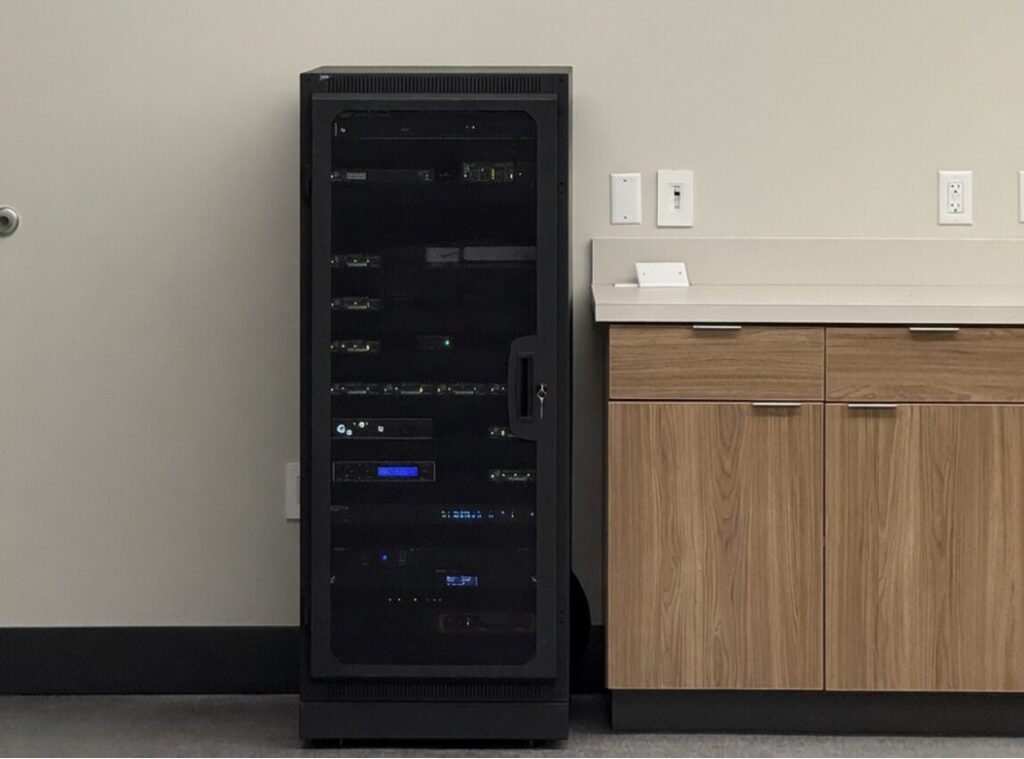
7. Equipment Racks and Supporting Infrastructure
The technology operators see is only one part of the system. Equipment racks, cabling, network connections, power management, cooling and organized documentation all contribute to the reliability and maintainability of an RTCC.
Supporting infrastructure should be carefully planned so equipment can be serviced, upgraded and expanded without unnecessary disruption.
Go Media’s Real-Time Crime Center Experience
Go Media has experience designing and installing AV technology for law enforcement and public safety environments.
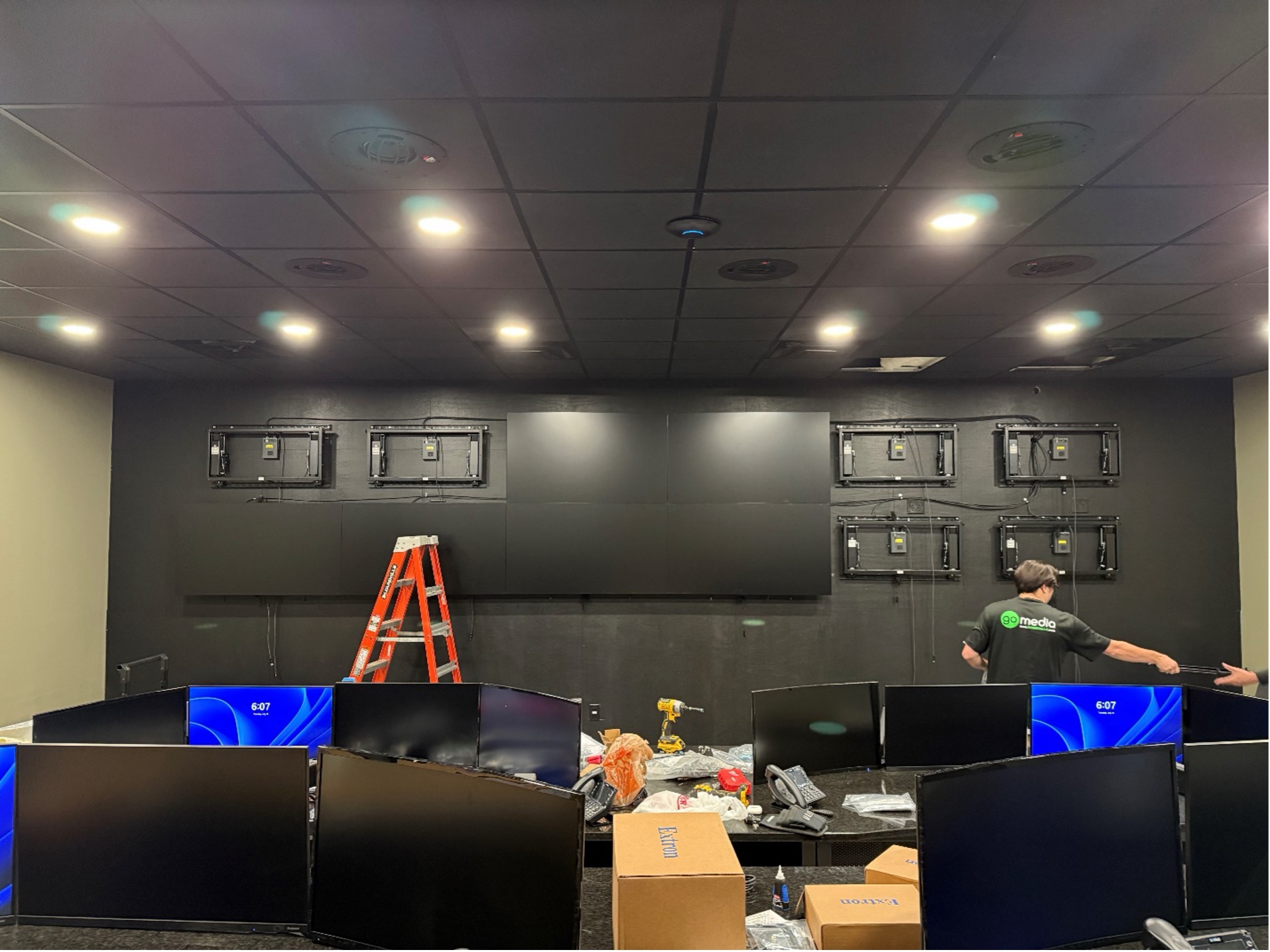
One recent example is the Real-Time Crime Center for the Ouachita Parish Sheriff’s Department. Go Media provided audiovisual design and integration solutions supporting the center’s display systems, command center layout, connectivity and monitoring infrastructure.
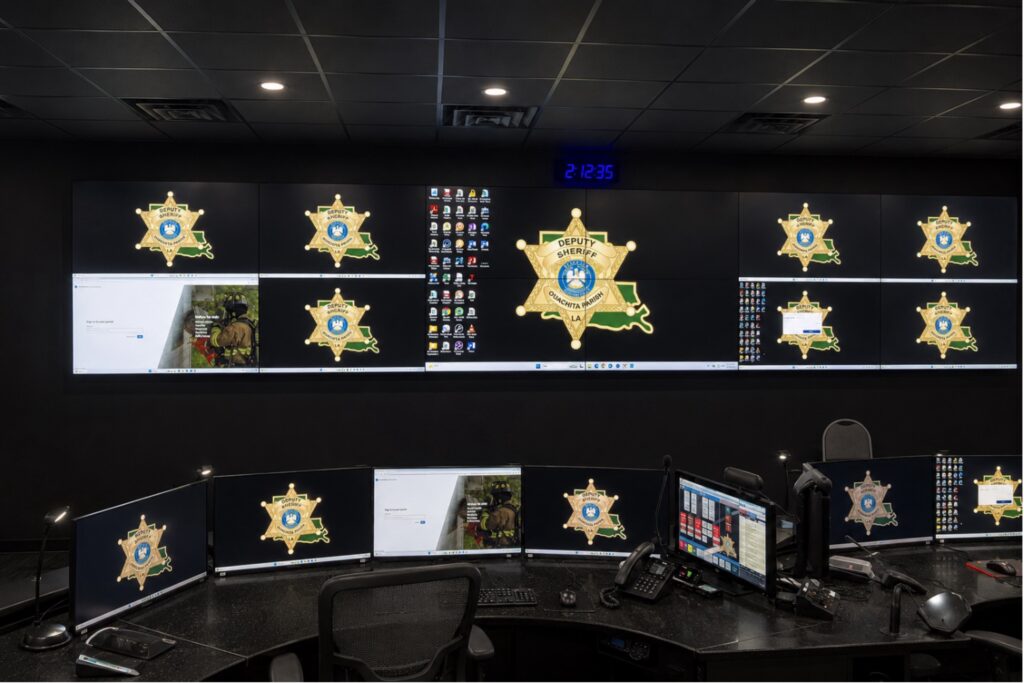
The completed environment gives personnel access to live surveillance information and critical data that can support faster response, informed decision-making and improved officer awareness.
Go Media takes a hands-on approach to projects like these. The team evaluates the physical space, meets with stakeholders and develops a system based on how personnel will actually use the room.
Best Practices for Planning an RTCC AV System
Begin With Workflow Analysis
Technology decisions should begin with an understanding of how the facility will operate. Agencies should involve analysts, supervisors, IT personnel and other regular users early in the planning process.
Important questions include:
- What information must remain visible throughout the day?
- How many operators will use the room?
- Which systems and data sources must be integrated?
- How will information be shared with field personnel?
- What changes during a major incident?
- Who will manage and maintain the system?
Plan Displays Around the Room
The size of a video wall should not be selected in isolation. Viewing distance, operator sightlines, workstation placement, ceiling height and ambient lighting all affect the appropriate display design.
Prioritize Ease of Use
Operators should be able to access frequently used functions without navigating complicated menus. Consistent controls, clearly labeled interfaces and preset room configurations can make the system easier to operate under pressure.
Build for Scalability
Camera networks, software systems and data sources are likely to evolve. The AV infrastructure should include a practical path for adding content sources, operator positions and display capacity.
Consider Redundancy and Continuity
Agencies should identify the technology components that are most critical to daily operations and determine how system interruptions will be handled. Power management, backup equipment, spare components and documented support procedures should be considered during planning.
Include Long-Term Service and Support
Mission-critical technology requires more than a successful installation. Agencies should choose an integration partner that can provide system documentation, operator training, preventative maintenance, troubleshooting and ongoing technical support.
Questions to Ask an RTCC AV Integrator
Before selecting a technology partner, agencies should ask:
- Do you have experience with law enforcement or mission-critical facilities?
- Will the system be designed around our operational workflow?
- Can you integrate our existing cameras, software and data sources?
- How will the system accommodate future expansion?
- What training will be provided to operators and administrators?
- What service and support are available after installation?
- How will equipment, cabling and system configurations be documented?
Frequently Asked Questions About Real-Time Crime Centers
What technology is used in a real-time crime center?
RTCC technology may include surveillance cameras, video management systems, license plate recognition, mapping platforms, dispatch information, video walls, audio systems, conferencing technology and centralized AV controls. The exact system depends on the agency’s responsibilities and available data sources.
What is the purpose of an RTCC video wall?
An RTCC video wall provides a centralized display surface for monitoring multiple camera feeds, maps, alerts and operational data. It helps personnel view related information together and quickly prioritize content during an incident.
Can an RTCC integrate existing surveillance cameras?
In many cases, existing cameras and video platforms can be incorporated into a new RTCC. Compatibility, network configuration, video quality and access requirements should be evaluated during the system design process.
How large should a real-time crime center video wall be?
The appropriate size depends on the room layout, number of operators, viewing distance, content being displayed and amount of information that must remain visible. A professional site evaluation is necessary before choosing a display size or technology.
Can an RTCC system be expanded later?
Yes. A scalable system can be designed to accommodate additional camera feeds, software platforms, operator workstations and display capacity. Expansion requirements should be discussed during the initial planning phase.
Building the Future of Public Safety Technology
Real-time crime centers represent a shift toward more connected, informed and proactive public safety operations. However, the value of an RTCC depends on how effectively its information can be displayed, understood and shared.
A professionally designed AV system creates the visual and communication foundation that allows operators to manage complex information without being overwhelmed by the technology.
Whether your agency is planning a new RTCC, upgrading an existing command center or improving another mission-critical facility, Go Media can design a solution around your personnel, workflow and long-term operational goals.
Plan Your Real-Time Crime Center with Go Media
Go Media provides custom AV system design, professional installation, technology integration and ongoing support for law enforcement and public safety facilities.
Contact Go Media to discuss your real-time crime center, command center, dispatch facility or public safety technology project.